Everything you need to know before turning your passion for style into a thriving career in fashion.
Fashion design is one of the most creative, competitive, and rewarding careers you can pursue. But here's the thing it's not just about having a good eye for style. The most successful fashion designers are part artist, part businessperson, part storyteller, and part technician. So if you've been wondering what it actually takes to make it in this industry, you are in the right place. Let's break it down skill by skill.
What's Inside This Guide
Sketching & Drawing Ability Textile & Fabric Knowledge Sewing & Pattern Making Creative Vision & Trend Awareness Digital Design Skills Communication & Presentation Business & Marketing Sense Attention to Detail Research & Adaptability Networking & Collaboration
$105B+Global fashion design market size in 2025 10+Core skills every fashion designer needs 4 yrs Average time to master the fundamentals 23%Industry growth expected by 2030
01 Sketching & Drawing Ability Foundation Skill Before a single stitch is sewn, every great garment starts with a sketch. The ability to translate what's in your head onto paper is one of the most fundamental skills in fashion design. You don't need to be a fine artist but you do need to communicate your ideas clearly through illustration.
Fashion sketches, often called "croquis," are elongated figure drawings used to showcase how clothing drapes and flows on a body. Learning proportions, line weight, shading, and movement all matter here. Even if your style is loose and gestural, your sketches should be readable and purposeful.
Pro Tip: Practice sketching for at least 20–30 minutes every day. Start with basic croquis templates and gradually develop your own signature illustration style. Your sketchbook is your portfolio's backbone.
02 Textile & Fabric Knowledge Technical Skill You cannot design with fabric if you don't understand it. Knowing the difference between a silk charmeuse and a crepe de chine or understanding how jersey behaves versus denim is knowledge that directly impacts your design decisions. Fabric is your medium, and you need to speak its language.
Great designers understand weight, drape, stretch, breathability, care instructions, and cost. They know which fabrics work for structured silhouettes versus fluid ones, which materials photograph well, and which hold dye correctly. This knowledge is what separates a design that looks good on paper from one that actually works in the real world.
Pro Tip: Visit fabric stores regularly and handle swatches. Start a fabric journal where you paste samples and note their properties. Learning through touch is irreplaceable in this field.
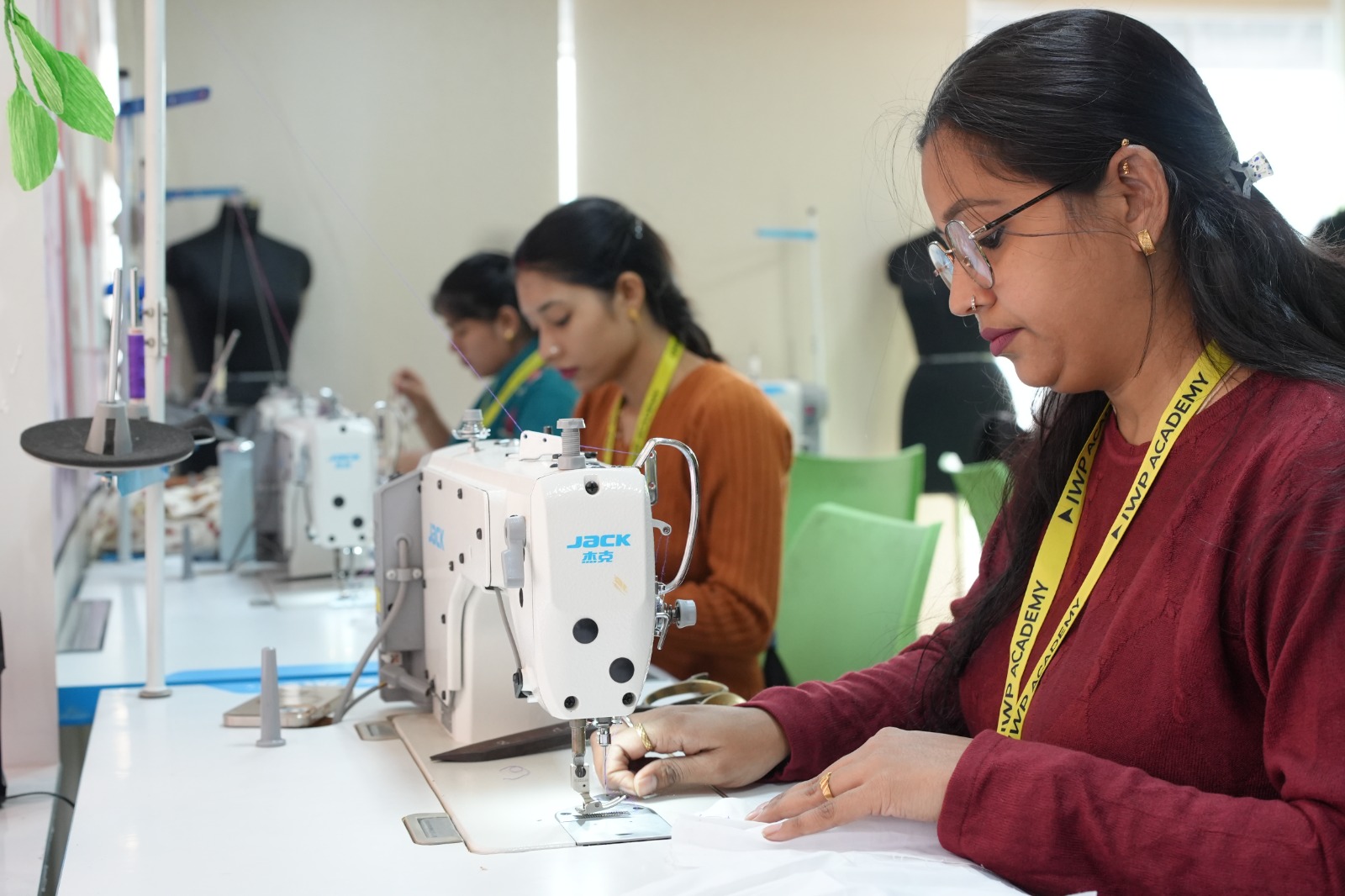
03 Sewing & Pattern Making Technical Skill Some designers outsource construction entirely but the best ones know how to sew. Understanding the construction process gives you an enormous advantage: you design with what's actually possible in mind, and you can communicate more effectively with production teams, tailors, and manufacturers.
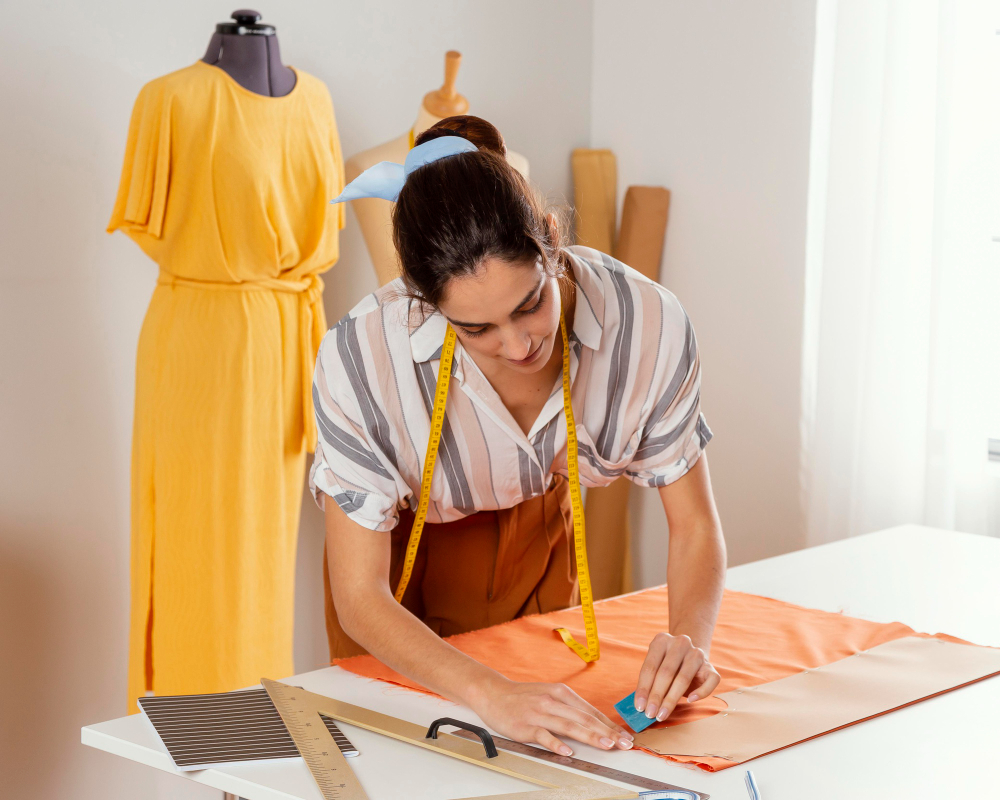
Pattern making is the bridge between a sketch and a finished garment. A pattern is essentially a blueprint — a set of flat shapes that, when cut from fabric and sewn together, create a three-dimensional garment. Learning to draft, grade, and adjust patterns is a skill that takes time but pays dividends throughout your career.
Pro Tip: Even if you plan to work with production teams, take a basic sewing and pattern-drafting course. Understanding construction will make you a far more empathetic and effective designer.
04 Creative Vision & Trend Awareness Creative Skill Fashion design is, at its heart, a creative discipline. You need a point of view a consistent aesthetic that makes your work recognizable. This doesn't mean copying existing styles; it means developing your own visual language rooted in research, culture, history, and personal experience.
At the same time, commercial fashion requires trend awareness. You need to understand where fashion is headed not just copy what's already popular. Following trend forecasters, studying runway collections, observing street style, and staying curious about art, music, architecture, and pop culture all feed your creative instincts and keep your work relevant.
Pro Tip: Don't just follow fashion trends study the cultural shifts that drive them. The best designers are social observers. Read widely, travel when you can, and keep a mood board habit.
05 Digital Design Skills Modern Skill In today's industry, digital literacy is non-negotiable. Tools like Adobe Illustrator and Photoshop are standard across the industry for creating technical flat drawings (also called "tech flats") and digital mood boards. CLO 3D and Browzwear are increasingly used for virtual sampling and 3D garment visualization, dramatically reducing waste and prototyping time.
If you're entering the industry now, getting comfortable with these tools will make you significantly more employable. Many studios and brands expect designers to deliver digitally ready assets from day one. The good news? These tools have a learning curve, but they're not insurmountable and the investment pays off immediately.
Pro Tip: Start with Adobe Illustrator for technical flats — it's the industry standard. Platforms like Skillshare and LinkedIn Learning have solid fashion-specific courses. Pair digital work with hand sketching; the best designers use both.
The Designer's Mindset Skills are learnable. But mindset is the multiplier. The most successful fashion designers share these common traits — beyond technical ability:
✓They see failure as feedback, not defeat. Rejected samples and missed trends are lessons. ✓They stay curious — obsessively curious — about culture, people, and the world around them. ✓They're willing to be uncomfortable. Great design often requires pushing against convention. ✓They're persistent. The fashion industry is competitive, and resilience is a survival skill. ✓They collaborate without losing their vision. Being open to input doesn't mean losing your voice.
06 Communication & Presentation Soft Skill A brilliant idea poorly communicated is a missed opportunity. Fashion designers work with buyers, manufacturers, stylists, photographers, editors, and clients — and you need to be able to present your vision clearly and compellingly to all of them. That means knowing how to build a presentation deck, talk through a mood board, and defend your creative decisions.
Written communication matters too — especially in today's remote and hybrid work environments. Being able to write a clear, concise design brief or a compelling product description is a real professional advantage.
Pro Tip: Practice presenting your work even if it's just to a friend or mentor. The ability to tell the story behind your designs. where they came from, what they mean is a powerful skill that builds client trust and brand narrative.
07 Business & Marketing Sense Strategic Skill Here's a truth most design schools underemphasize: fashion is a business. Beautiful collections that don't sell are beautiful failures. Understanding margins, pricing, supply chains, and customer psychology is what allows designers to build sustainable careers especially those who want to launch their own label one day.
You don't need an MBA, but you do need to understand how a collection is positioned, how a brand is built, and how marketing (especially through social media and content) drives demand. Designers who can think like brand builders not just creators are far more valuable in today's market.
Pro Tip: Follow fashion business publications like Business of Fashion (BoF) and WWD. Understanding how the commercial side of the industry works will make you a smarter, more strategic designer.
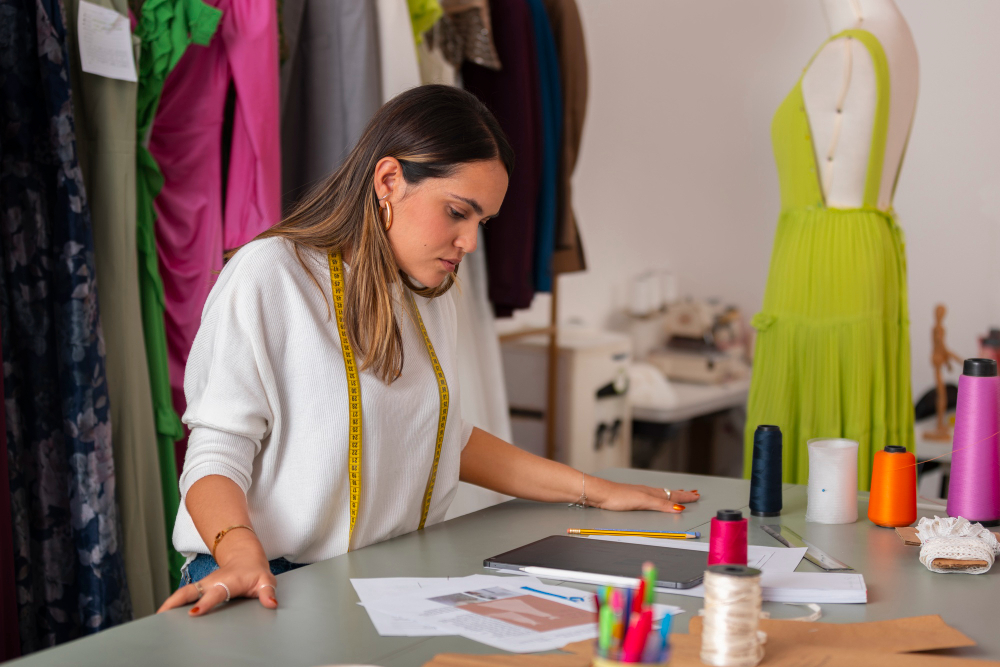
08 Attention to Detail Core Trait In fashion, the details are everything. The way a button is placed, how a seam is finished, whether a hem sits at exactly the right point — these micro-decisions define the difference between a garment that feels expensive and one that doesn't. Great designers obsess over the fine print.
This applies beyond construction. It's in your spec sheets, your sample reviews, your quality control checks, your fit sessions. Attention to detail is what earns you the trust of manufacturers, buyers, and customers alike. It's the mark of a professional.
Pro Tip: Develop checklists for every stage of the design and production process. A systematic approach to reviewing your work catches errors before they become expensive problems down the line.
09 Research & Adaptability Strategic Skill Every great collection begins with research. Whether you're exploring a historical period, a cultural movement, a scientific phenomenon, or a personal experience, depth of research is what gives your work meaning beyond aesthetics. Shallow designs are easily forgotten. Designs rooted in genuine ideas leave a mark.
Adaptability is equally important fashion moves fast. Trends shift, seasons change, consumer tastes evolve, and global events reshape what people want to wear. Designers who adapt quickly, pivot when needed, and stay curious about what's changing in culture and commerce are the ones who last.
Pro Tip: Build a dedicated research phase into every project. Visit museums, archives, libraries, and markets. Your references should be diverse the best inspiration often comes from outside the fashion world entirely.
10 Networking & Collaboration Industry Skill Fashion is a relationship-driven industry. Your network the stylists, photographers, buyers, fellow designers, editors, and mentors you connect with over the course of your career is one of your most valuable professional assets. Opportunities in fashion often come through who knows you, not just what you've made.
Collaboration, too, is baked into the process. Designers rarely work alone. You'll collaborate with pattern makers, merchandisers, production teams, and creative directors. The ability to work well with others to respect different expertise, share credit, and maintain your vision while being genuinely open to input is a skill that makes everything else work better.
Pro Tip: Attend industry events, fashion weeks, and trade shows whenever possible. Even virtual communities count being active in fashion forums and on LinkedIn puts you on the radar of people who hire. Relationships compound over time.
Final Thoughts: Where Do You Start? If you're reading this and feeling a little overwhelmed that's completely normal. No one enters this industry with all ten of these skills fully developed. The goal isn't perfection from day one; it's progress with intention.
Start where you are. If drawing is your strength, build from there. If you're more technically minded, lean into pattern making and construction. The most important thing is to start, stay consistent, and build a body of work you're proud of because in fashion, your portfolio speaks louder than any qualification.
The designers who make it are rarely the most naturally talented. They're the most persistent. They love the process, not just the outcome. They study the industry, learn from rejection, and keep creating regardless. If that sounds like you, fashion design might just be the career you were made for.
Frequently Asked Questions
How long does it take to become a fashion designer? A formal fashion design degree typically takes 3 to 4 years. However, you can start working in the industry earlier through internships and freelance work. Mastery of all core skills can take many years of professional experience beyond that.
Is fashion design a good career in 2026? Yes, particularly for designers who embrace sustainability, digital tools, and direct to consumer models. The industry is evolving, but demand for skilled, adaptable designers remains strong especially those who understand both creativity and commerce.
What software should a fashion designer learn first? Adobe Illustrator is the industry standard starting point for technical flat drawings. Adobe Photoshop is next for mood boards and image editing. Once you're comfortable with those, exploring CLO 3D for virtual garment visualisation is a valuable next step.
Fashion Career Guide · Written for aspiring designers worldwide Share this guide with someone who's chasing their fashion dreams.