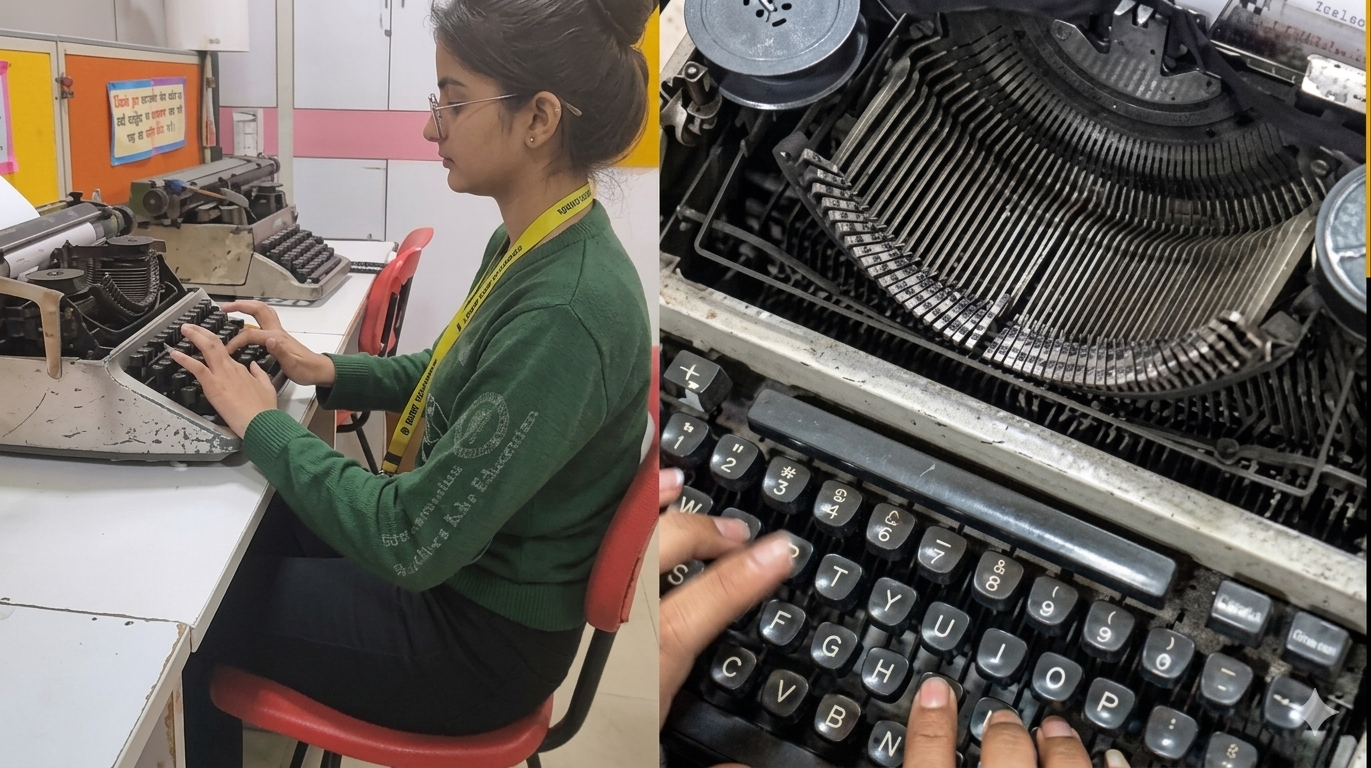
Let us be honest for a moment. Choosing a career after school or college is really stressful. Everyone around you has an opinion on what you should do. Some people say you should go for engineering. Others think you should study commerce.. Then there are those who believe that only government jobs are worth considering.. In all this noise some really valuable and rewarding career paths are completely ignored.
Stenography is one of them. If you have ever thought about a career that offers government job security, consistent demand, real skill development and growth across industries stenography is a great option.. The best part is that not many students are talking about it, which means less competition and more opportunities for those who choose it.
This article is your guide to understanding why enrolling in a stenography course today could be the smartest decision you make for your future.
What is stenography?
Stenography is the art and skill of writing at speed using a shorthand system. A stenographer listens to spoken words and records them quickly and accurately using either a shorthand machine or a specialized shorthand writing method. Think of it this way: in a courtroom a judge speaks, lawyers. Witnesses give statements. Someone needs to record every word accurately and instantly. That person is the stenographer. Without them the entire legal process would fall apart.
Stenography is not about writing fast. It is about being precise concentrating and being professionally responsible. It is a skill that takes training and practice. That is exactly what makes it so valuable.
Why is stenography in high demand today?
Some people think that stenography is outdated because of technology.. That is not true.
The reality is that government offices, courts, parliament, police departments and legal firms all require stenographers to record official proceedings. These records are documents and cannot be replaced by an app or auto-generated text. They need a trained and certified professional.
On top of that private companies, media houses, corporate boardrooms and even hospitals hire stenographers for documentation, transcription and administrative work. The demand for stenography has not dropped. It has simply spread across sectors than ever before.
There is a growing need for stenographers in the judicial sectors. The judicial system across India processes millions of cases every year. Every hearing, every statement and every verdict needs to be recorded. Courts at every level from district courts to the Supreme Court of India require stenographers. This need is permanent and growing.
Government offices and ministries also constantly recruit stenographers through exams conducted by the Staff Selection Commission and state public service commissions. These are well-paid and respected positions that come with full government benefits.
Multinational companies, law firms, media agencies and business executives regularly need stenographers and personal assistants. The corporate world values speed, accuracy and confidentiality and a trained stenographer delivers all three.
What are the benefits of choosing stenography as a career?
Choosing stenography over conventional paths has some impressive advantages.
You get job security that you can count on. Government stenographer jobs come with one of the secure employment structures available. Once recruited you have stability, pensions, allowances and clear promotion paths. In a job market this kind of security is priceless.
You can enter your career faster. You do not need a four-year degree to start working as a stenographer. With the training and certification you can begin your career relatively quickly. This means time studying and more time earning.
Stenography opens doors across sectors. You can work in courts, government offices, private companies, media or as a freelancer providing transcription services. Your skill travels with you across industries.
As a stenographer you get respect and professional identity. In a courtroom or a government setting the stenographer holds a position of trust and authority. The records you produce are binding documents. That comes with prestige.
You get a salary with growth. Entry-level stenographers earn salaries that grow steadily with experience and promotions. Government positions also come with perks like housing allowance, medical benefits and pension plans.
What skills do you need to become a stenographer?
The good news is that these skills are completely learnable. You do not need to be born with any talent. You need to be willing to practice.
Here is what a strong stenographer builds over time:
You need to develop shorthand writing speed. The core skill is to write shorthand at speeds of 80 to 120 words per minute depending on the level of your role. This comes through practice.
You need typing speed and computer knowledge. Most modern stenographers also need typing skills on a computer keyboard. A speed of 40 words per minute or more is often required for government exams.
You must be able to concentrate and listen actively. You need to listen and record accurately at the same time. This takes focus and regular practice.
You need language skills. Good command over English or Hindi depending on your target role is important. Grammar, spelling and language sense all contribute to the quality of your transcription work.
You need to maintain confidentiality and professional ethics. Stenographers often handle information. Being trustworthy and discreet is not optional. It is a part of the stenography job.
What are the government job opportunities after stenography?
This is where stenography really shines as a career choice.
Government stenographer jobs are among the sought-after positions in India and for good reason. Here are some of the recruitment areas:
The Staff Selection Commission conducts a national-level exam for Grade C and Grade D stenographer positions. These posts are placed across central government ministries and departments. The recruitment happens regularly. Thousands of positions are filled every year.
The judiciary recruits stenographers at levels. These are positions with excellent pay scales and long-term stability.
Every state in India has its recruitment process for stenographers in state-level government departments police departments and district courts.
Parliamentary stenographers record the proceedings of state and central bodies. These are respected positions that require top-level speed and accuracy.
Many police departments and administrative offices hire stenographers to assist officers and IAS level officials. These roles often come with benefits and career advancement opportunities.
What are the private sector opportunities in stenography?
Beyond government jobs the private sector offers a range of career opportunities for trained stenographers.
Private legal firms deal with amounts of documentation. Stenographers and legal transcriptionists are in demand in this space.
Senior executives in companies often hire personal assistants with stenography skills to manage meetings, dictation, correspondence and documentation.
News agencies, broadcast companies and publishing houses hire stenographers for transcription, interview recording and documentation purposes.
With the rise of work many trained stenographers now offer freelance transcription and documentation services to clients around the world. This is a growing income stream with working hours.
Hospitals and healthcare providers require professionals to transcribe doctors notes, patient records and medical reports accurately. This is an growing niche within the transcription field.
What is the salary and career growth in stenography?
Let us talk numbers because that matters.
An entry-level government stenographer starts with a pay scale in the range of Rs 25,500 to Rs 81,100 per month under the Pay Commission along with dearness allowance house rent allowance and other benefits.
Higher-grade positions offer pay scales starting from Rs 29,200 per month with allowances that significantly increase total earnings.
In the sector salaries vary but typically start between Rs 15,000 and Rs 30,000 per month for beginners with significant growth, as experience and speed increase.
Background: You do not need to have a science or commerce background to learn stenography. Any student from any stream can pursue stenography.
Stenography is a skill that you can learn if you are willing to practice and stay consistent. This is the important qualification you need to have.
The Importance of Practical Training and Speed Practice
This is something that no student should overlook when it comes to stenography.
Stenography is not something you can learn by reading textbooks. You need to practice it to become good at it. The best stenography institutes teach you shorthand. Also give you practice sessions to improve your speed.
These practice sessions include typing practice, dictation sessions and mock tests.
You need to practice to improve your skills. Students who practice every day see an improvement in their speed within a few months.
If you do not practice you will fall behind.
When you are looking for a place to learn stenography look for institutes that give you hands on training and practice sessions.
The quality of your training will determine how well you do in your career as a stenographer.
Career Stability and Future Scope of Stenography
Let us talk about the future of stenography. Will stenography still be relevant in ten or twenty years?
The answer is yes.
Stenography is a skill that will always be needed. Artificial intelligence can transcribe speech. It cannot replace a certified stenographer in a court of law.
There are places where stenographers are needed such as courts, government offices and hospitals.
The demand for stenographers is. It is not a career that will disappear.
Stenography is a career that is evolving and expanding into areas.
If you are a student looking for a career that's stable and secure you should consider stenography.
Stenography is a skill that will always be needed. It offers many job opportunities.
You can work in courts, government offices or private companies.
Stenography is not a fashioned career it is a smart and strategic choice.
Do not wait, start looking for a stenography course near you today.
Invest in your skills. Build a career that offers stability and respect.
Frequently Asked Questions (FAQs)
- How long does it take to complete a stenography course?
Most stenography courses take six months to one year to complete. Some courses may take up to two years.
The duration of the course depends on the type of course and the level of shorthand speed being trained.
Students who practice consistently can achieve exam speeds within six to twelve months.
- What is the eligibility to join a stenography course?
The basic eligibility for stenography courses is completion of Class 10 or Class 12 from a recognized board.
There are no requirements related to subject background or stream so students from all fields can join.
- What is the salary of a government stenographer in India?
A Grade D government stenographer starts with a pay of Rs 25,500 per month.
Grade C stenographers start with a pay of Rs 29,200 per month.
The total monthly package increases significantly when you add dearness allowance, house rent allowance and other government benefits.
- What government jobs are available after completing a stenography course?
After completing a stenography course you can apply for positions such as Stenographer Grade C and Grade D.
You can also work as a court stenographer, steno typist or personal secretary in government ministries.
- What are the career opportunities after learning stenography?
Stenography opens up career opportunities in the government and private sectors.
You can work in courts, ministries, police departments and parliament.
You can also work in law firms, corporate offices, media agencies and hospitals.
Freelancing is also a growing option, where you can offer transcription and documentation services to clients
Take the step today find a stenography course, near you and start building a career that truly lasts.