What If Your Sketchbook Was Your Career?
You know that feeling when you are completely lost in drawing something and suddenly two hours have passed without you even noticing.. When you look at a blank canvas and already see in your mind exactly what you want to create. That kind of effortless absorption in Fine Arts is not just a hobby. It is a signal. A signal that Fine Arts is not something you do for fun. It is something you are genuinely built for.
Here is the part that most Fine Arts students struggle with. They love Fine Arts. They spend hours sketching, painting and imagining.. Then someone asks them "So what are you going to do with that?". Suddenly all that confidence disappears.
The truth is, the world needs Fine Arts more than ever. Advertising, film, fashion, publishing, interior design, digital media, animation and countless other industries run on Fine Arts. The demand for people who can think visually communicate through Fine Arts. Bring imagination to life is growing every single year.
The only thing standing between a student who loves Fine Arts and a professional who earns from Fine Arts is the education and the right direction. That is what a Fine Arts course provides.
In this article we are going to explore how Fine Arts helps turn creative talent into a real, rewarding and respected profession. If you have ever wondered whether your love for Fine Arts can actually take you somewhere keep reading. Because it absolutely can.
What is Fine Arts?
Fine Arts is the study and practice of disciplines that express ideas, emotions and perspectives through visual and artistic forms. It is a field that celebrates imagination originality and the power of expression.
When most people hear Fine Arts they think of painting and drawing.. While those are certainly part of Fine Arts, Fine Arts as a field is much broader and more exciting than that.
Fine Arts covers disciplines like:
*. Sketching: The foundation of all visual art forms from portraits to architectural illustrations.
-
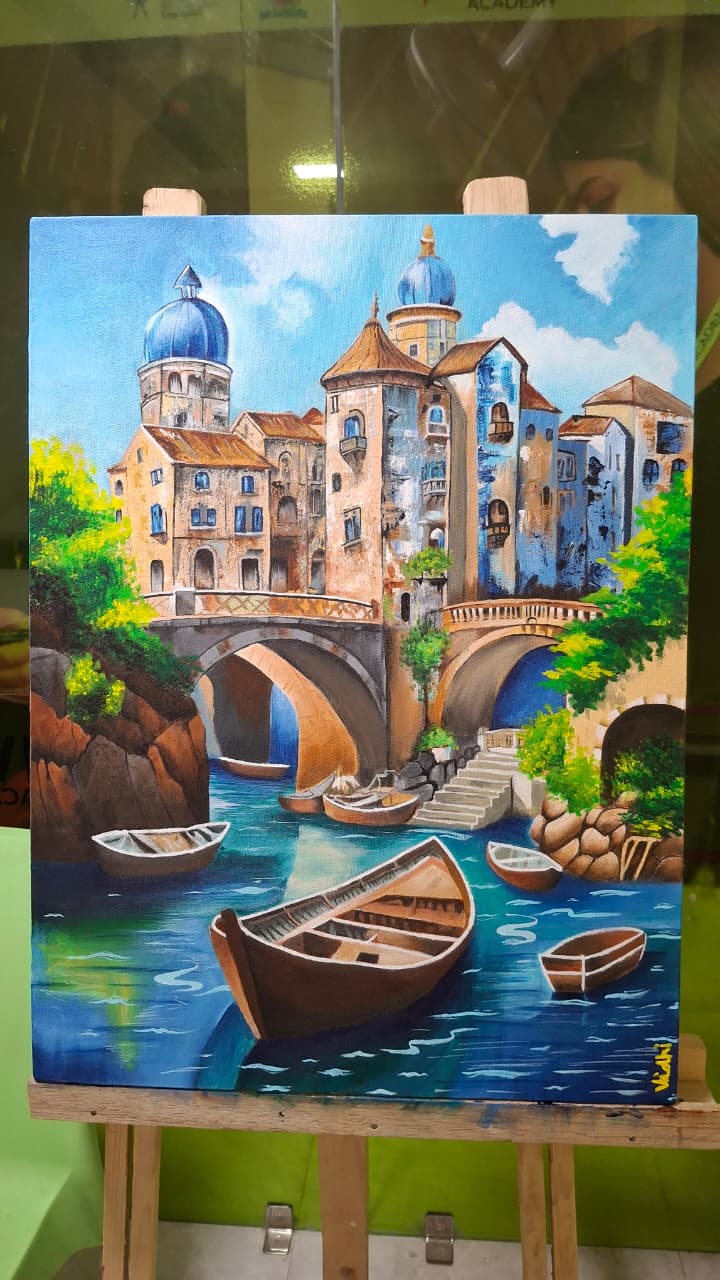
Painting: Using mediums like oil, watercolor, acrylic or gouache to create visual compositions.
-
Sculpture: Creating three forms using materials like clay, metal, stone or mixed media.
-
Printmaking: The art of creating images on surfaces like wood, metal or fabric and transferring them onto paper or other materials.
-
Digital Art: Using technology and design software to create artwork for digital platforms.
-
Visual Storytelling: Using images, illustrations and compositions to communicate narratives and ideas.
At its core Fine Arts is about learning to see the world and communicate what you see in a way that moves people. It is one of the deeply human things a person can do and it is also the foundation of some of the most exciting and creative career options available today.
How Fine Arts Helps Turn Creativity into a Profession
Many students have creative instincts.. Natural talent alone is like a seed sitting on a shelf. It has potential. Without the right environment it never grows into something real. A Fine Arts course creates that environment. Here is how:
- Skill Development That Goes Beyond Talent
Talent gets you started. Fine Arts training takes you further. Fine Arts training teaches you the foundations that make your creative instincts more powerful and more precise.
You learn how light and shadow work how perspective changes the way a composition feels how color combinations create responses and how to use different mediums to achieve different effects.
- Building Artistic Confidence
One of the challenges Fine Arts students face is not lack of talent. It is lack of confidence. Many talented Fine Arts students hold themselves back because they are not sure their work is good enough or because they do not know how to present it
Professional Fine Arts training builds confidence by giving you feedback exposing you to a variety of artistic styles and techniques and pushing you to experiment and evolve.
- Portfolio Creation
In the world of Fine Arts your portfolio is your resume. It is the thing potential clients, employers or institutions look at when evaluating your work. Building a professional portfolio is one of the most important things a Fine Arts course helps you do.
- Industry Exposure
Professional Fine Arts training does not just teach you to create. It teaches you how the Fine Arts industry works. You learn about art direction, client briefs presenting your work pricing your Fine Arts and understanding markets and industries where your Fine Arts skills are in demand.
This industry exposure is what bridges the gap between being a Fine Arts student and becoming a working professional. It gives you context, connections and confidence that you simply cannot get from self study alone.
- Opening Doors to Real Career Opportunities
A Fine Arts course does not just sharpen your Fine Arts skills. It legitimizes your Fine Arts expertise. It gives you a credential that says to the world: this person is serious, trained and ready.. That opens doors that talent alone often cannot.
Skills Students Learn in Fine Arts
When you pursue a Fine Arts course from a Fine Arts institute you develop a rich set of skills that are useful across many creative professions. Here are some of the important ones:
-
Drawing and Sketching
-
Painting Techniques
-
Creative Thinking
-
Visual Storytelling
-
Color Understanding
-
Observation and Attention to Detail
Fine Arts develops your ability to think beyond the obvious. You learn to approach problems find inspiration in unexpected places and produce original work that stands out.
Career Opportunities in Fine Arts
Here is where many students are genuinely surprised. The career in Fine Arts is not limited to becoming an artist who sells paintings. The skills you develop through Fine Arts training doors across a wide range of industries and professions.
You can be an artist, create and sell artwork through galleries, exhibitions, online platforms and private commissions.
You can be an illustrator create illustrations for books, magazines, advertising campaigns, packaging and digital media.
You can be a designer use your Fine Arts foundation to work in visual communication creating logos, brand identities, marketing materials and digital content for businesses and organizations.
You can be an art teacher share your passion and knowledge with the generation of Fine Arts students.
You can be a freelancer build a creative career working with a variety of clients across industries.
You can be an animator, work in film, television, gaming or digital media creating animated content.
You can be an art director, lead teams and guide the visual direction of advertising campaigns, publications or digital projects.
The Fine Arts career path is genuinely diverse. With the Fine Arts skills and the right training you can find your niche and build a career that is as unique as your creative voice.
Why Students Should Choose Fine Arts
If you are sitting on the fence about whether to pursue a Fine Arts course here are some real reasons why it is a smart choice:
- Creative Freedom
Fine Arts is one of the few fields where your individuality is your greatest asset. You are not expected to fit into a mold. You are encouraged to develop your voice, your own style and your own perspective.
- Strong Career Growth
The creative economy is growing. Digital media, content creation, gaming, animation, fashion and advertising are all expanding rapidly. All need people, with strong visual skills. Fine Arts graduates are well positioned to grow with these industries.
- Personal Expression and Fulfillment
Fine Arts allows you to express yourself in a way that's unique and fulfilling. It is a field that values creativity, imagination and originality.
With Fine Arts you can build a career that's true to who you are and what you want to achieve.
A career in Fine Arts is really rewarding not because of the money you can make but also because it is very fulfilling. When you create something from nothing it is a feeling. You get to express your thoughts and ideas through your work and see how it affects other people. This makes your work feel meaningful every day.
Transferable Skills
The skills you learn from Fine Arts such as thinking paying attention to details communicating visually and solving problems are useful in many other fields. Even if your career takes a turn these skills will always be valuable.
A Growing Community
The global art and design community is very active, collaborative and always changing. When you pursue Fine Arts you become part of a world of minded creative professionals, opportunities and inspiration that will continue to enrich your life and career for a long time.
Your Creativity Deserves a Real Career
Being is not something you grow out of or a hobby you stop doing when you become serious about life. It is a talent, a real skill and for the right person it is the foundation of a great career. Fine Arts helps you develop your creativity gives it structure, depth and direction. It turns your instincts into professional skills builds your confidence grows your portfolio and connects you with many career opportunities that most people do not even consider.
If you have ever been told that art is not a career this is your reminder that they were wrong. There are working artists, designers, illustrators, animators and creative professionals who built successful lives by taking their passion seriously and getting the right training. You have the creativity now take the step. Enroll in a Fine Arts course today and start turning your talent into the career you have always imagined.
Frequently Asked Questions (FAQs)
- What is Fine Arts and what does it include?
Fine Arts is the study and practice of disciplines that use visual and artistic forms to express ideas, emotions and perspectives. Fine Arts includes drawing, painting, sculpture, printmaking, digital art, visual storytelling and more. A Fine Arts course teaches you both the foundations and the creative principles that help you develop your own artistic voice and professional skills.
- Can I actually build a career through Fine Arts?
Yes you can. Fine Arts graduates work in industries, including illustration, graphic design, advertising, animation, film production, publishing, teaching and freelancing. The demand for creativity is growing across digital and traditional media. With the training and a strong portfolio a Fine Arts career offers real financial rewards and professional growth.
- What skills are required to pursue Fine Arts?
The important thing you need to start is a passion for creativity and visual expression. Fine Arts also helps you develop skills like drawing and sketching painting techniques, color theory, creative thinking, visual storytelling and attention to detail. You do not need to be a prodigy to start. A good Fine Arts course is designed to take you from wherever you're and help you grow step by step.
- What are the career options available after completing a Fine Arts course?
After completing a Fine Arts course you can pursue careers as an artist, illustrator, graphic designer, animator, art teacher, art director, set designer, freelance creative professional or work in advertising and digital media. The skills you develop through Fine Arts training are useful in many industries and create a strong foundation for a diverse and evolving career.
- Can complete beginners join a Fine Arts course?
Yes they can. Most Fine Arts courses are designed to welcome students at all levels including beginners. You do not need formal training or a specific educational background to get started. What matters most is your enthusiasm for creativity and your commitment to learning. A good Fine Arts institute will take you from the basics. Guide you step by step, toward professional competence and confidence.